

Khmer traditional games are an important part of Cambodia’s cultural heritage. They have been played for many generations and originate from the daily lives of farmers and local communities. Although their exact origins are unknown, these games have been carefully passed down from one generation to the next through oral tradition and shared experience.
These games were often created using simple materials found in nature, such as seeds, sticks, or handmade objects, reflecting the creativity and resourcefulness of rural communities. Each game not only provides entertainment but also carries cultural meaning, often teaching values such as teamwork, respect, patience, and cooperation.
Today, Khmer traditional games are still widely enjoyed during free time, community gatherings, festivals, and especially during Khmer New Year. They play an important role in promoting physical health by improving strength, balance, and coordination, while also enhancing mental skills such as quick thinking and problem-solving. In addition, these games encourage social interaction and help strengthen relationships among participants.
In the past, traditional games were not formally recorded in written form. Instead, people learned by observing others and practicing within their communities. As a result, some of these games are gradually disappearing due to the influence of modern technology and foreign entertainment. Despite this challenge, they remain deeply meaningful as they represent the identity, history, and cultural richness of Khmer civilization.
In recent years, efforts have been made by schools, cultural organizations, and local communities to preserve and promote these traditional games. Activities such as cultural festivals, educational programs, and public events help reintroduce these games to younger generations and raise awareness about their importance. As Khmer New Year approaches, families, friends, and neighbors come together to celebrate by playing these traditional games. The joyful atmosphere they create brings laughter, unity, and a strong sense of community. More importantly, they serve as a valuable way to pass on cultural knowledge and ensure that Cambodia’s rich traditions continue to thrive for future generations.
Chol Chhoung "ល្បែងចោលឈូង"
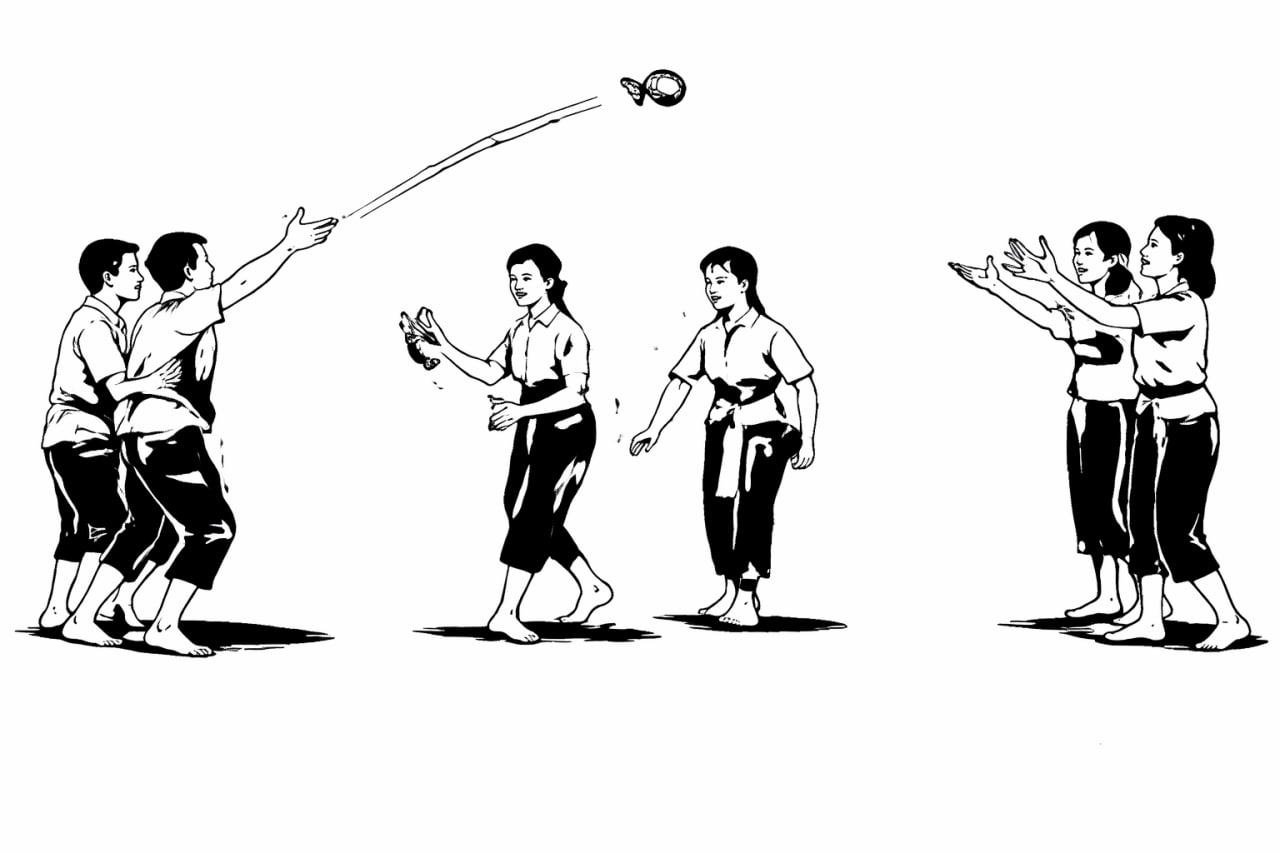
A Game of Joy, Music, and Connection
Chol Chhoung is one of the most popular Khmer traditional games, especially during Khmer New Year in April. It is lively, fun, and full of energy often played at pagodas and village gatherings, especially among young people. The game uses a “Chhoung,” which is made from a krama (traditional scarf) tied into a small soft ball with a short tail. Players are divided into two groups usually boys and girls standing about 8–10 meters apart.
How to Play Chol Chhoung?
The game begins when one team throws the Chhoung into the air toward the other team. If a player catches it, they throw it back, trying to hit someone from the opposite side.
- If the player catches it, they continue the game by throwing it back
- If they miss, their team must sing and dance before returning the Chhoung.
This makes the game not just about winning, but also about entertaining and connecting with others.
Two Common Versions
1. Sing and Dance Version When a player is hit, their team must perform songs and dances. Players often create playful or teasing lyrics, making the game more fun and personal.
2. Free Your Team Version When a player is hit, they are “captured.” Their teammates must hit the other team to free them.
Main Idea of the Game
Chol Chhoung is more than just a game. It combines movement, teamwork, music, and laughter. It reflects Khmer culture and strengthens social connections, making it a memorable part of New Year celebrations.
Bos Angkunh "ល្បែងបោះអង្គុញ"
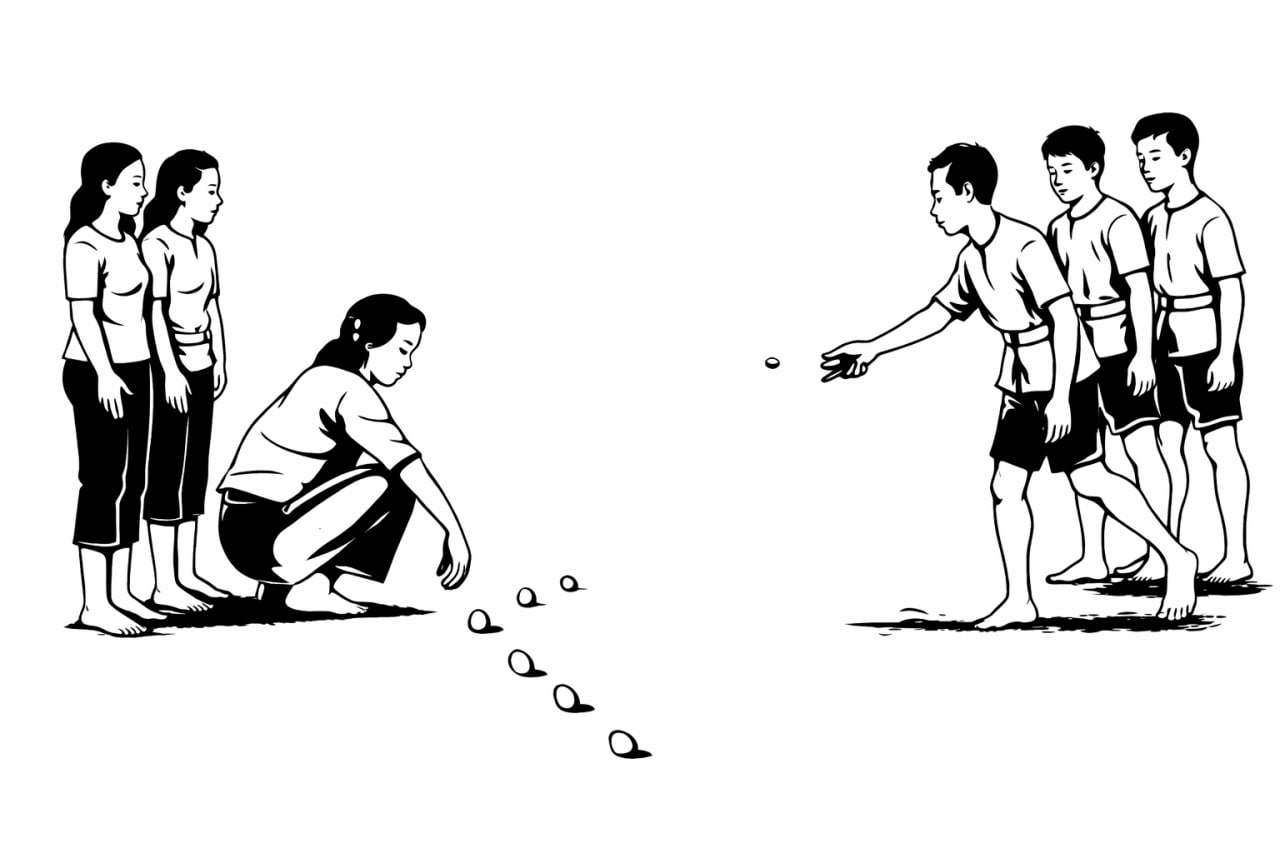
A Game of Skill, Focus, and Fun
Bos Angkunh is another popular Khmer traditional game played during Khmer New Year in villages, schools, and pagodas. The game uses Angkunh seeds, which come from a climbing plant found in provinces like Stung Treng and Kratié. These seeds are hard, smooth, and ideal for throwing.
How the Game Works
Players are divided into two teams of 2 to 10 people. Each team can include both men and women.
- Each team sets up 3 or 5 seeds on the ground in a small pyramid shape.
- The distance between teams is about 8 meters.
There are two types of seeds:
- Kaoy Dam – target seeds placed on the ground
- Kaoy Bos – seeds used for throwing
Players take turns throwing their seeds to hit and knock down the opponent’s targets.
Key Rule
The goal is to knock down all the seeds but not the center seed first. If the center seed is hit first, the team loses the round. Each successful hit earns points. If a player misses, the turn passes to the other team. The game continues until one team reaches the agreed score
Penalty Stage: “Chous”
At the end of each round, the winning team performs a playful penalty called “Chous”, where they lightly knock the losing team’s knees using Angkunh seeds.
There are two styles:
- Bay Trorjeak (Cold Rice): a gentle tap
- Bay Kdao (Hot Rice): a stronger knock that creates a “click” sound If the expected sound is not made, the losing team can strike back.
Two Main Stages of the Game
1. Setup Stage
Teams arrange the seeds and take turns throwing to score points.
2. Penalty Stage
The winning team “Chous” the losing team.
Leak Kon Saeng (Scarf Hidden Game) "ល្បែងលាក់កន្សែង"
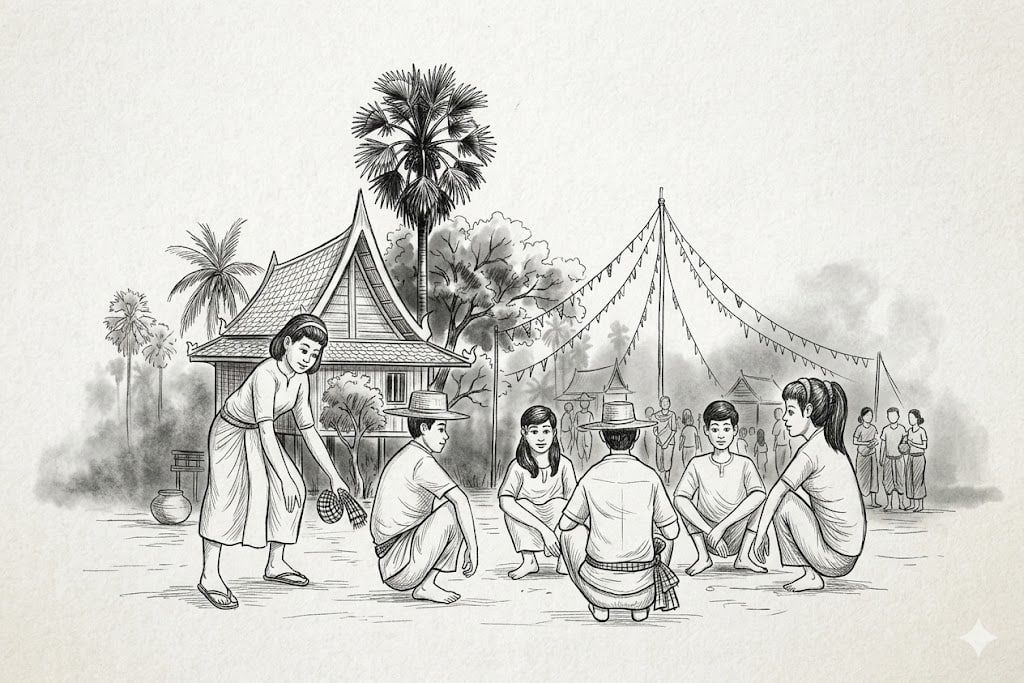
Leak Kon Saeng is a traditional Khmer children’s game that is usually played at night, under moonlight, during free time, and especially in the Khmer New Year season. It is a fun group game that helps people laugh, move around, and enjoy time together.
What you need
The game uses a simple scarf or towel. The cloth is twisted or folded and tied at both ends so it becomes easier to hold and swing.
How the game is played
Players sit in a circle facing inward. One person is chosen as the “hider.” This person walks around the outside of the circle while secretly carrying the scarf.
While moving, the group often sings and claps to make the game more exciting. The hider quietly drops the scarf behind one seated player without them noticing.
The tricky part is:
- If the player does NOT notice the scarf behind them, the hider continues the game and may “tap” or tag them with the scarf.
- If the player notices it in time, they can grab the scarf and chase the hider around the circle.
The chase continues until someone safely returns to the empty spot in the circle.
Main idea of the game
The game is about attention, quick reaction, and fun teamwork. It also brings excitement because no one knows who will get the scarf next.
Two styles of play
There are two common ways to play:
- In the first style, the direction and movement are fixed before the game starts.
- In the second style, the hider has more freedom to move and choose where to place the scarf.
Simple rules
Players must stay seated and pay attention. They should not look back or cheat. The game depends on honesty, focus, and quick thinking.
Cultural importance
Leak Kon Saeng is more than just a game. It reflects Khmer culture by bringing people together in a joyful and respectful way. It helps strengthen friendships, build community spirit, and pass traditional values to younger generations. During Khmer New Year, this game plays an important role in creating a fun and meaningful celebration.
Orb Tror Lach or Bes Ov Loeuk Game (Pick Fruit Game) "ល្បែងអោបត្រឡាច ឬបេះឪឡឹក"

Orb Tror Lach, also known as Bes Ov Loeuk, is a traditional Khmer folk game usually played at night under moonlight, especially in rural villages. It is a simple and fun group game for both boys and girls, and it does not require any special occasion.
What you need
You don’t need any special equipment to play this game. Just a group of players and a place where everyone can sit in a line, usually around a tree trunk or a stable object that they can hold onto tightly.
How the game is played
Players first choose roles: one person becomes the seller, one becomes the buyer, and the rest become the “fruits” (such as melons or watermelons). The fruit players sit closely in a line and hold onto each other or a tree trunk very tightly. The buyer then negotiates with the seller and is allowed to “harvest” the fruits. After that, the buyer goes along the line, tapping each player’s back while asking “raw or ripe.” When reaching the last player, the buyer tries to pull them out from the group. If the group is strong and holds together, the buyer may fail, and the game continues with role changes.
Main idea of the game
The main idea is teamwork, strength, and fun interaction. It also encourages children to work together and stay united while enjoying playful competition.
Styles of play
This game is usually played in a circle or line formation. It is active and physical, involving pulling, holding, and resisting. Players often take turns in different roles so everyone gets a chance to experience both the “buyer” and the “fruit” positions. It is commonly played casually at night under moonlight in villages without strict rules.
Tug of War (Teanh Prot) "ល្បែងទាញព្រ័ត្រ"
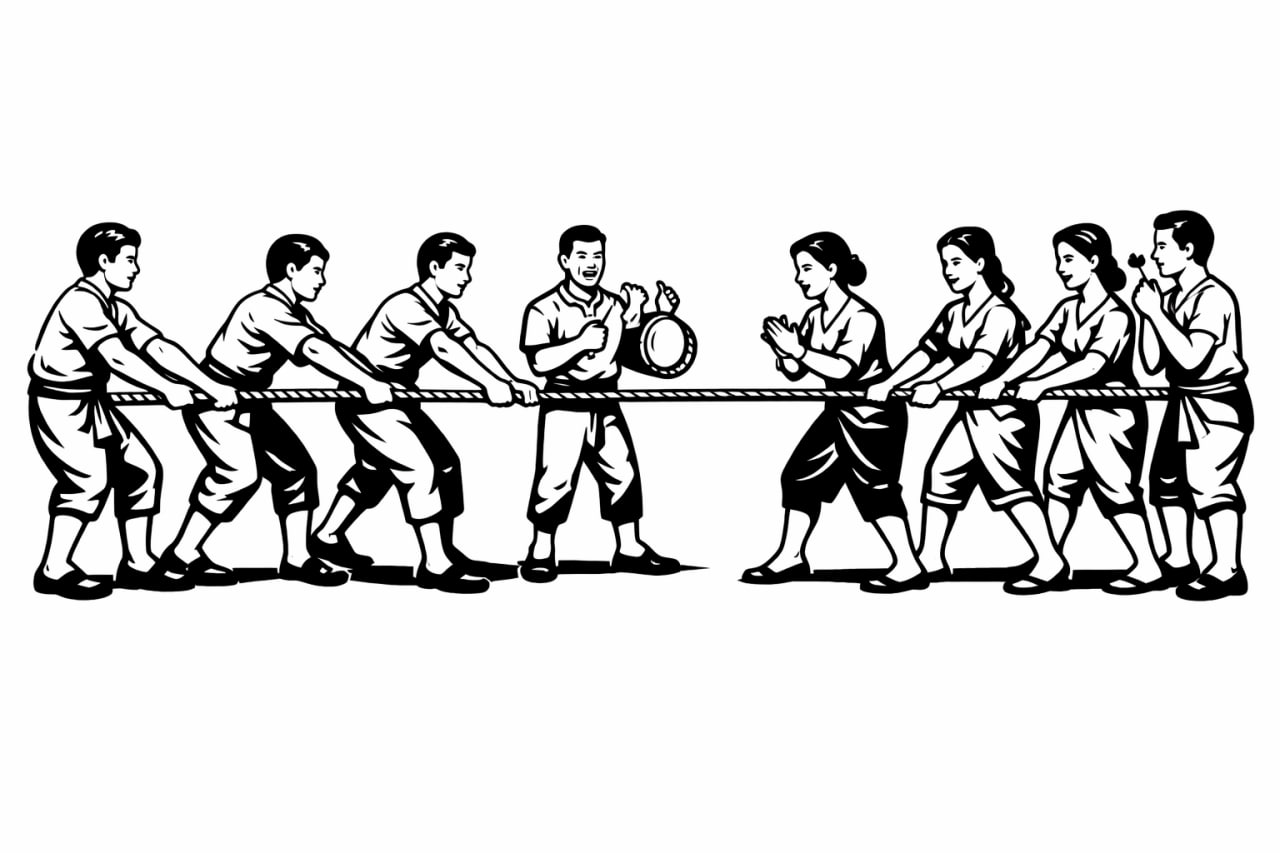
Tug-of-war, known in Khmer as Teanh Prot (“pulling the rope”), is a traditional game played worldwide. In some countries, it is simply a test of strength, but in Cambodia, it also has deep social and religious meaning. It is mainly played during Khmer New Year and ceremonies like Chlong Chet, which marks the beginning of the rice cultivation season. The game usually takes place in open spaces such as temple grounds or village areas. Two teams, often men and women, pull a rope from opposite sides. A line is drawn in the middle, and the goal is to pull the other team across the line.
Historically, Teanh Prot is closely linked to the Hindu myth of the Churning of the Ocean of Milk, where gods and demons pull a serpent rope together. This story is famously shown in the bas-reliefs of Angkor Wat, and many Cambodians easily connect this myth with the tug-of-war game. The game symbolizes unity, struggle, and cooperation to restore balance and prosperity.
What You Need
- A long strong rope (traditionally made from buffalo/cow skin or coconut fiber)
- Open space (such as pagoda grounds or village fields)
- A drum or traditional instruments like Samphor, Kong Mong, or Rokaing
- At least 10–20 players (5–10 per team)
Where It Is Played
- Mostly at Buddhist monastery during Khmer New Year celebrations
- Also played in villages or any wide open area
- Can be played in daytime or nighttime if there is enough light (moonlight or lamps)
How the Game Is Played
- Players are divided into two teams, usually balanced by strength and number.
- Each team lines up and holds one end of the rope. Strong players are placed at the ends and middle for support.
- A leader stands in the center, giving signals and motivating players.
- A starting shout is given (such as “Yeak Oh!” followed by “Ho Voeuy!” three times).
- Both teams pull the rope with full strength.
- Drumbeats create rhythm and excitement during the game.
- The team that pulls the rope past the center line wins the round.
- The game is repeated several times for fun and exercise.
Styles of Play
- Male vs male teams
- Female vs female teams
- Mixed teams (with balance in number and strength)
- Friendly village or community competitions
- Casual play for fun or organized competitions during festivals
Benefits of the Game
- Builds physical strength and endurance
- Encourages teamwork and unity
- Creates joy and entertainment during festivals
- Strengthens community bonding
Khlaeng Jarb Kon Morn "ល្បែងក្លែងចាប់កូនមាន់"

Jarb Kon Khlaeng is a popular Khmer traditional game, often played during Khmer New Year and also in free time from work or school. It is lively, exciting, and full of strategy, encouraging players to protect themselves and their loved ones.
How to Play
The game begins by assigning roles:
- Hen (Meh Moan): Leads the chicks.
- Chicks: Hold each other’s waists and follow the hen.
- Barn Owl (Khlaeng): Tries to catch the chicks.
Players make a small fire, and the hen starts a playful chant toward the Barn Owl. When the Barn Owl hears the chant, they ask for “light” from the fire. The hen responds in a teasing way, sometimes giving the Barn Owl a target. The Barn Owl then chases the chicks, who cling together and run to avoid being caught. The game continues until the Barn Owl catches some or all of the chicks.
Two Common Styles
- Chasing Style: The Barn Owl chases chicks one by one, testing their speed and teamwork.
- Protective Style: The hen and chicks strategize to protect each other, showing planning and coordination.
Main Idea of the Game
Jarb Kon Khlaeng is more than just a game. It combines movement, strategy, teamwork, and fun. It teaches players how to protect themselves and their loved ones while reflecting Khmer culture and strengthening social bonds during celebrations.
Veay K’aom or Hit the Earthen Pot Game "ល្បែងវាយក្អម"
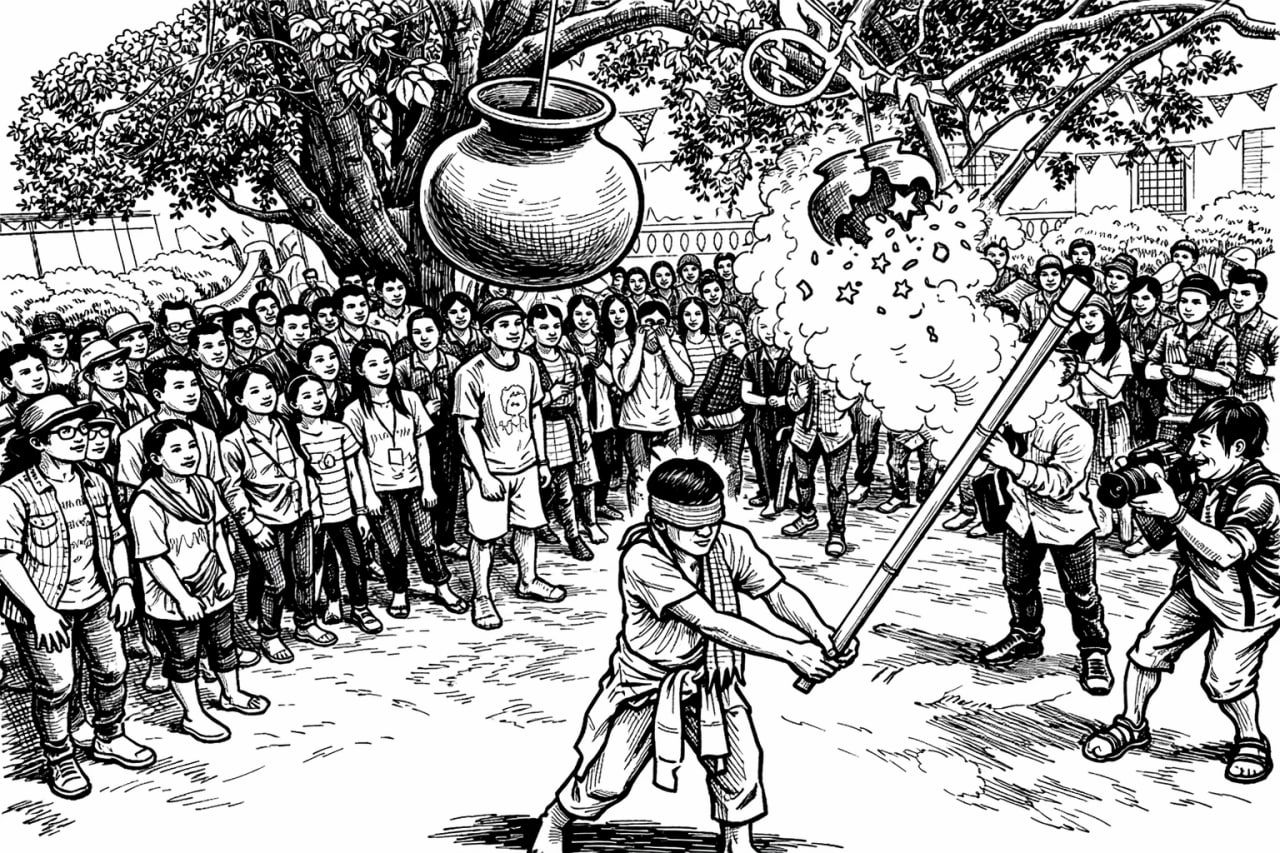
Veay K’aom is a traditional folk game enjoyed by people of all ages. It is commonly played on pagoda grounds during Khmer New Year. The main purpose of the game is to chase away evil spirits and bring happiness and prosperity by breaking the pot.
What You Need
- A strong rope – tied between two poles, trees, or pillars to support the pot’s weight.
- An earthen pot (jar) – filled with fragrant powder symbolizing freedom and happiness.
- A stick – long enough to reach the pot.
- Blindfold – usually a scarf to cover the hitter’s eyes.
- Supporters – friends or family can guide the hitter by giving directions.
Where It Is Played
- Pagoda grounds during Khmer New Year celebrations.
- Open spaces in villages or community areas.
- Can be played in daytime or nighttime if there is enough light.
How the Game Is Played
- The rope is tied between two poles at a proper height to hold the pot.
- The pot is hung from the rope and filled with fragrant powder.
- The hitter is blindfolded and rotated 3 times to make it more challenging.
- Using the stick, the hitter tries to strike and break the pot.
- Supporters may give verbal hints to help the hitter.
- If the hitter misses the pot three times, they lose.
- If the pot is successfully broken, the hitter is declared the winner.
Styles of Play
- Individual players – one hitter at a time.
- Friendly community competition – players take turns to see who can break the pot fastest.
- Can be casual fun or part of organized festivals.
Benefits of the Game
- Encourages focus, patience, and coordination.
- Promotes teamwork when supporters guide the hitter.
- Brings joy and excitement during festivals.
- Strengthens community bonding through shared participation.